NPPF 2026: Green Belt and Grey Belt
27 October 2026 · 2 min read
By Silas Willoughby, ABW Planning
 Planning Policy
The new Annex E gives Councils a detailed methodology for assessing Green Belt land and looking at how individual areas perform against the different Green Belt purposes. Councils are now encouraged to assess land at a sufficiently detailed level rather than treating huge areas of Green Belt as though they all perform in exactly the same way. Where Green Belt boundaries need to change, priority should be given first to previously developed Green Belt land, then to other grey belt, and only after that to other Green Belt locations.
At application stage, Grey Belt development can fall within the categories regarded as "not inappropriate development" where the remaining Green Belt would not be fundamentally undermined, there is an evidenced unmet need and the location is sustainable. However, major residential schemes still need to comply with the Golden Rules (Policy GB8).
For major residential schemes, until appropriate local policies are in place, affordable housing can be 15 percentage points above the normal requirement, capped at 50%, with a 50% requirement applying where there is no existing requirement. Infrastructure and accessible green-space contributions are also part of the package.
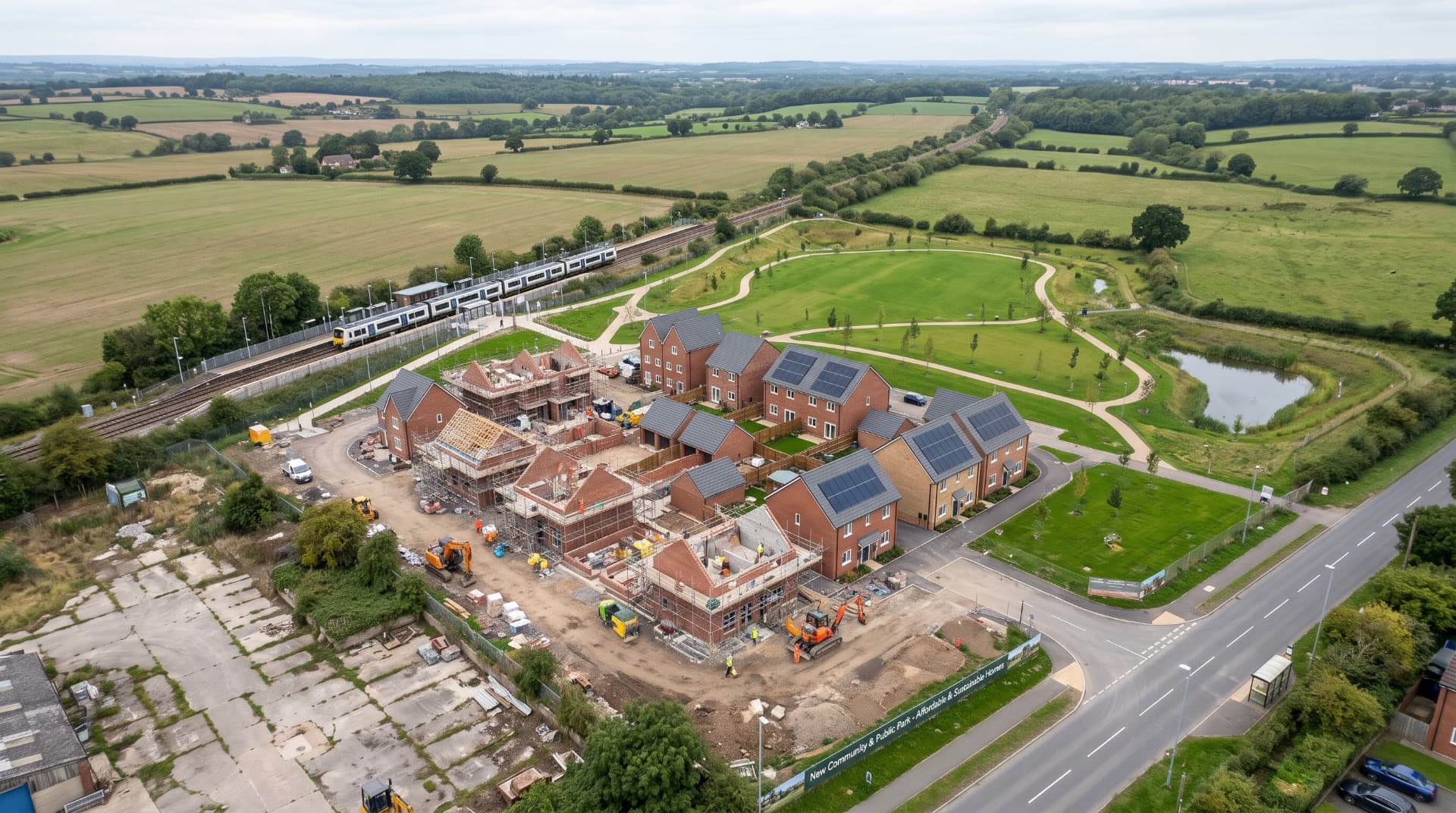
Residential and mixed-use development within reasonable walking distance of a well-connected station (800m guide) can potentially be regarded as not inappropriate Green Belt development, and if a spatial strategy identifies suitable land around one of those stations, the Council does not need to demonstrate exceptional circumstances simply to alter the Green Belt boundary.
For developers, that could make some Green Belt sites around frequent rail and public transport services much more interesting than they were before.
For landowners, it’s not just a question of whether the site can be developed, but what the site is actually worth once the Golden Rules and infrastructure requirements are properly factored in.
Overall, the new policies show a clearer route to development on certain sites, but that opportunity comes with a much clearer expectation around how value is achieved.